Teachers who stay
Our average educator has been at Marang for eleven years. The Grade 3 teacher who taught your eldest is likely still here for your youngest. That continuity is rare, and it matters.
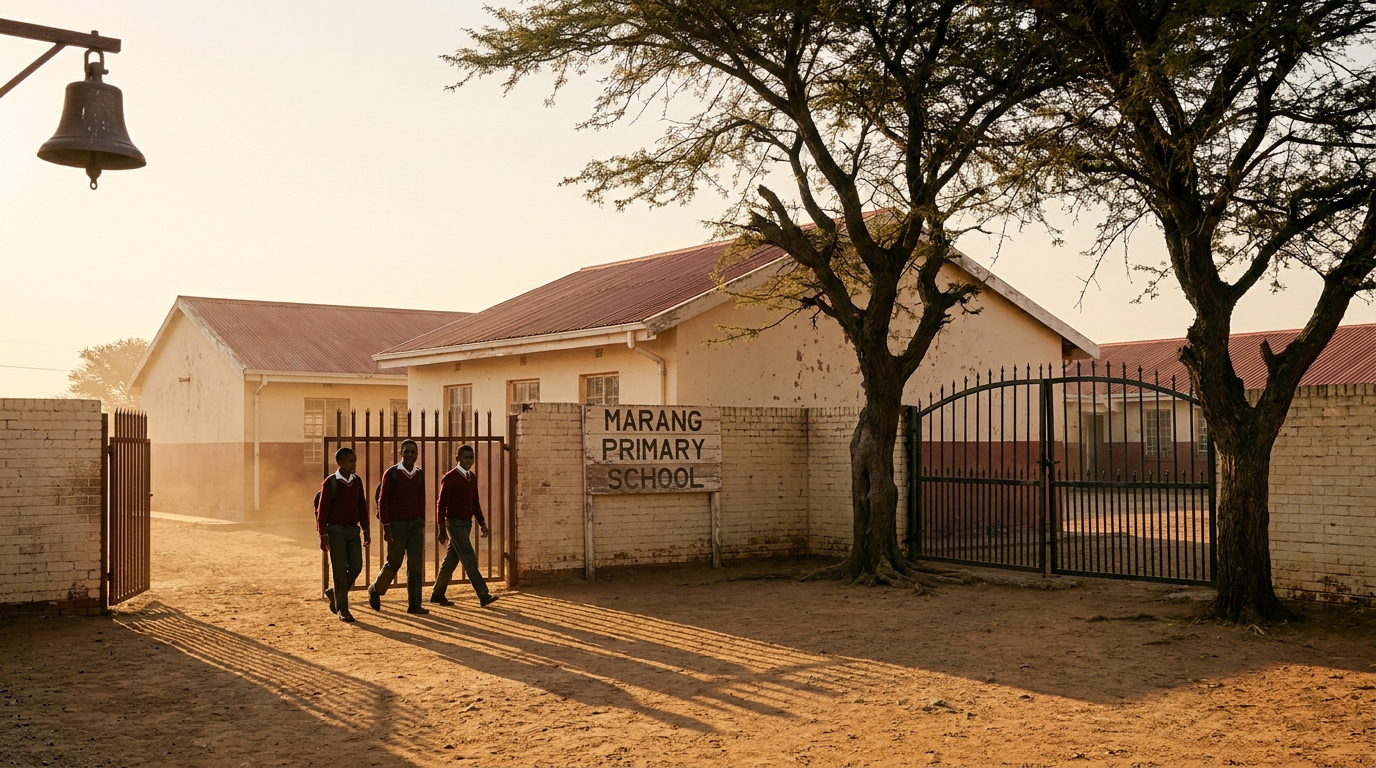
Marang Primary has stood on the corner of Ndebele Village, Klipgat C, since 1989. Generations of children from Mabopane have walked through our gates. This page is the story of how we came to be here, and what we promise to the next child who arrives.
When parents ask what makes Marang different, I tell them the truth: we are an ordinary public school, with ordinary classrooms and ordinary timetables. What is not ordinary is the care. The teachers here know your child’s name by the second week. The cooks know which child does not eat sweetcorn. The cleaners know which Grade 1 cries on Tuesdays because that is the day his mother works late. None of this shows up in a brochure. All of it shows up in how a child grows.
— Mr. Eliphus Pule Kotsokoane, Principal since 2014
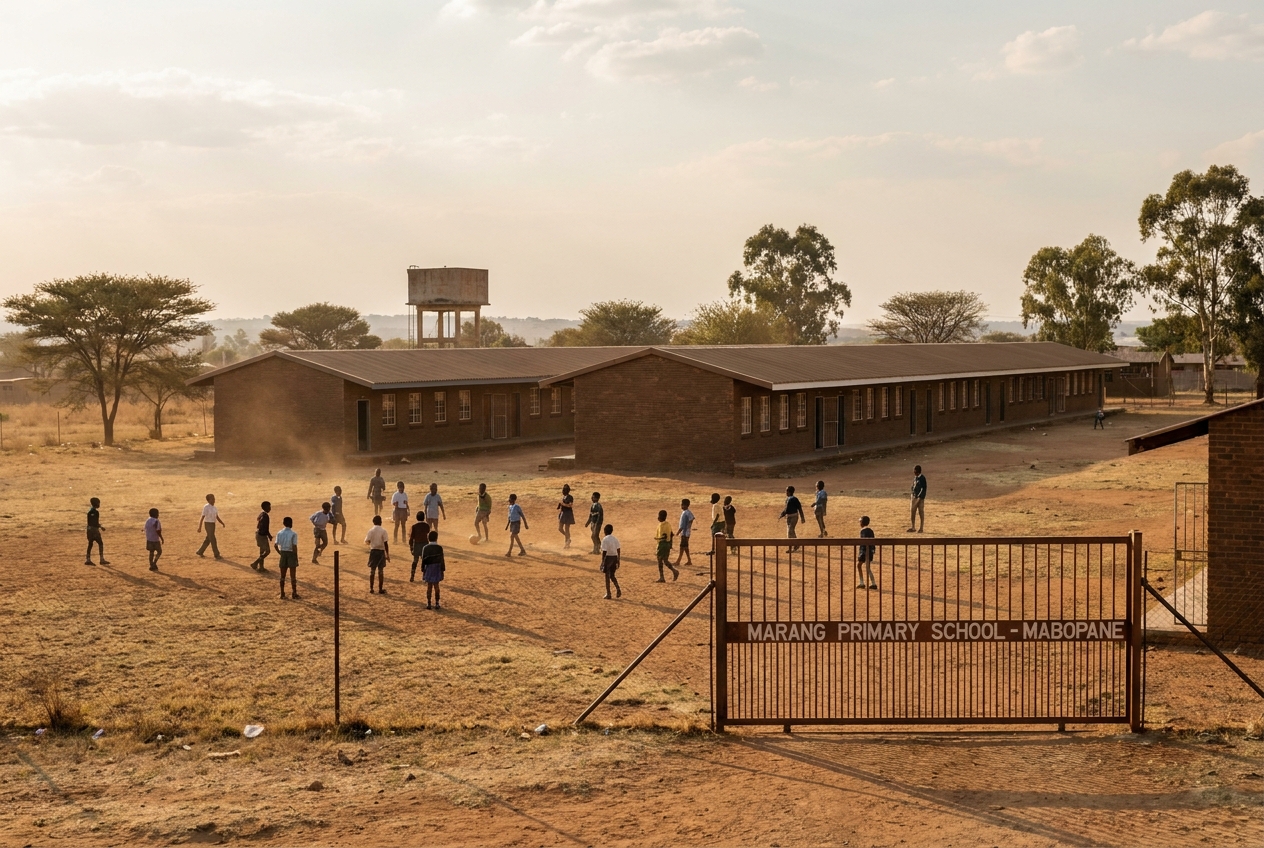
Marang Primary School opened its first Grade 1 class in January 1989, in a borrowed hall behind the local Methodist church. The founders were a group of seven parents from Klipgat C and Ndebele Village who were tired of their children walking forty minutes each way to the nearest primary in Mabopane. They wrote letters to the old Bophuthatswana Department of Education, and after fifteen months of persistence, the first six classrooms were built on the present site.
Today we are a registered public ordinary school under the North West Department of Basic Education, NatEmis number 600101095, falling under the Bojanala District Office. We hold Section 21 status, which means our SGB manages the school’s operating budget directly, and we are categorised as Quintile 1 — one of the schools serving the country’s most modest communities, and proudly a No-Fee school.
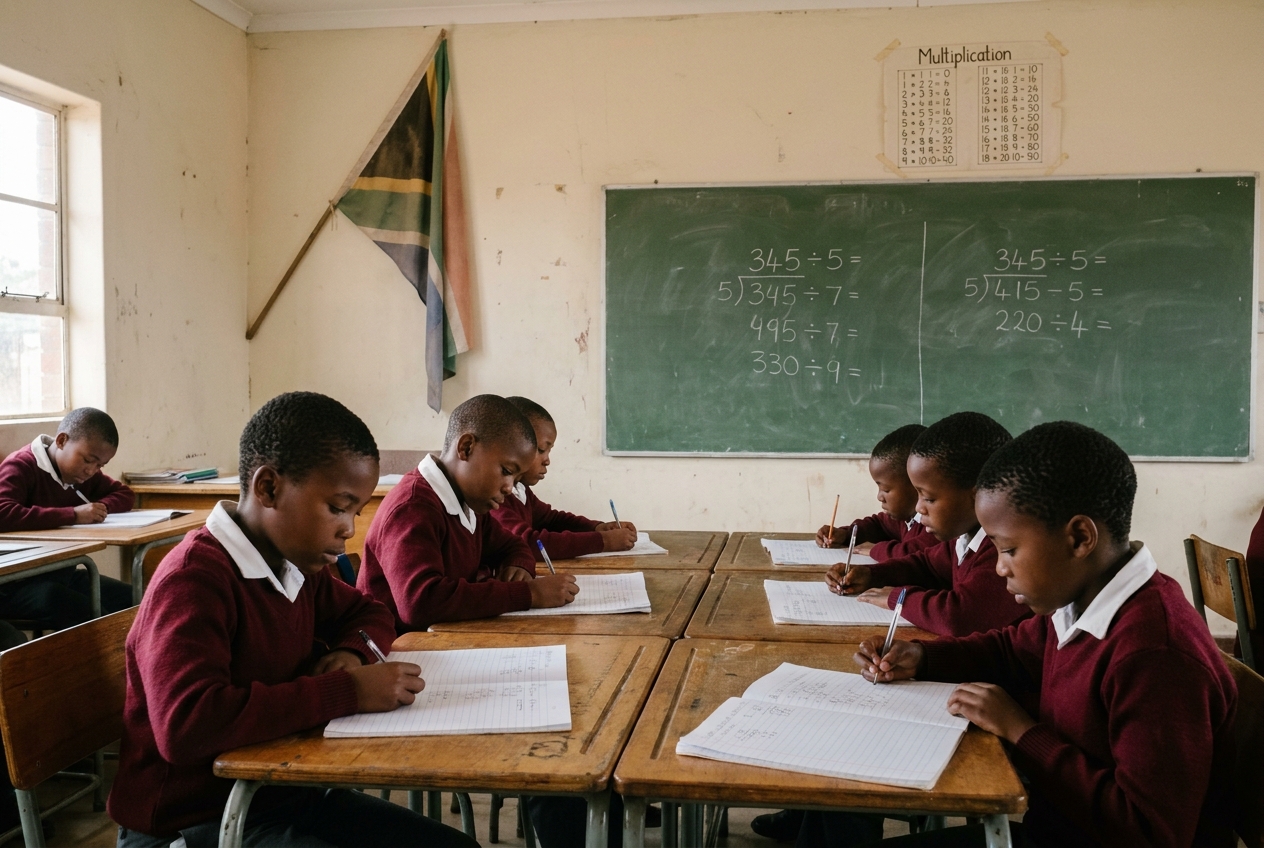
In 2024 we registered 447 learners across Grade R to Grade 7, with 17 full-time educators and a small support team of administrative, kitchen and grounds staff. We are a comprehensive primary school, which simply means we do not specialise; we teach the full CAPS curriculum, end to end, the way the Department of Basic Education expects.
Our medium of instruction is Setswana in the Foundation Phase, switching to English in Grade 4 in line with national policy. Most of our learners speak Setswana at home; a smaller number speak Sepedi or IsiZulu, and we accommodate both. Every learner receives a hot meal each school day through the National School Nutrition Programme. The kitchen is run by four mothers from Klipgat who started as volunteers and stayed.
A child who is known is a child who learns.
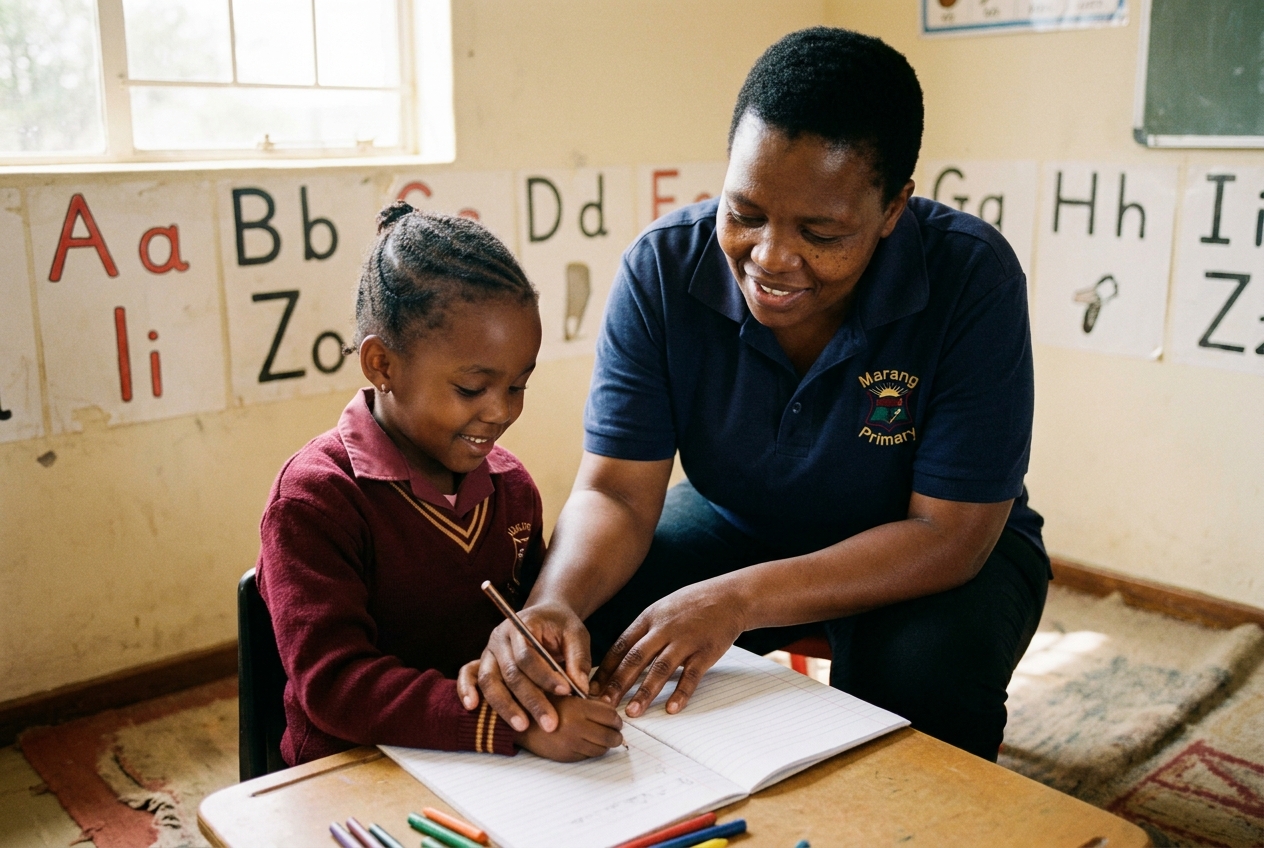
Our mission is simple, and we say it out loud at every staff meeting: to give the children of Klipgat C and Ndebele Village a primary education that opens doors, taught with patience, in a school that feels safe. We do not promise to turn every learner into a top achiever. We promise to know each child, to teach them honestly, to feed them, and to send them up to high school in Grade 7 ready for what comes next.
We work inside the constraints of a Quintile 1 No-Fee school, which means we have to be careful with every textbook, every meal, every chair. But we believe a school that is plain on the outside can still be rich on the inside — rich with attention, with stories read aloud, with a teacher who waits at the gate when a child arrives wet from rain. That is the kind of richness we are building, year after year.
We do not run open days with marching bands or printed brochures. Most of our new families arrive because a neighbour told them to. When we ask those neighbours what they tell people, three things come up again and again.
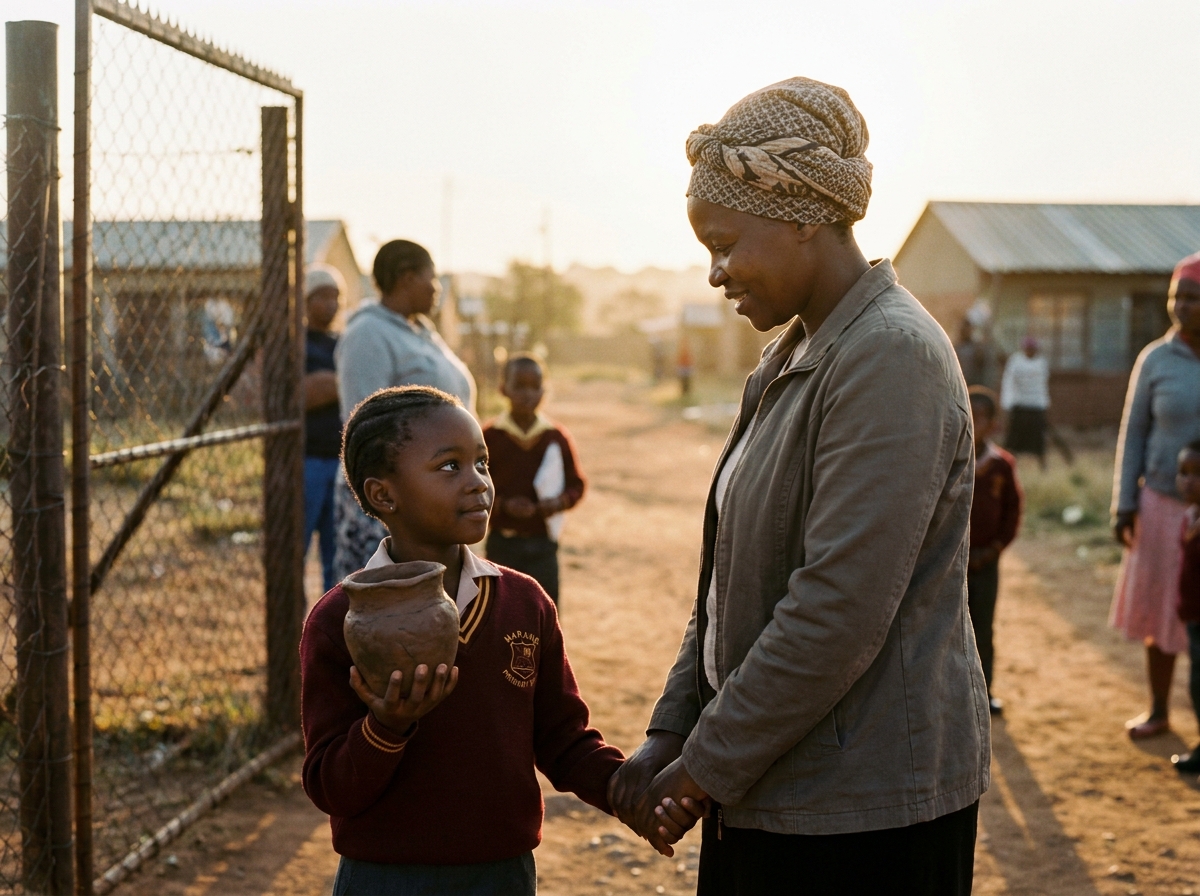
Our average educator has been at Marang for eleven years. The Grade 3 teacher who taught your eldest is likely still here for your youngest. That continuity is rare, and it matters.
NSNP-funded, cooked on site by mothers from this community. We serve 447 plates each school day, and we know which children depend on them most.
Our School Governing Body holds monthly open meetings. Anything from a broken window to a curriculum query gets heard. Our parents show up, and they are taken seriously.
Our leadership team is small. Most of them teach a class as well as carrying a portfolio. Below are the four colleagues who, between them, run Marang day to day — and the chairperson of our SGB, who keeps us honest.
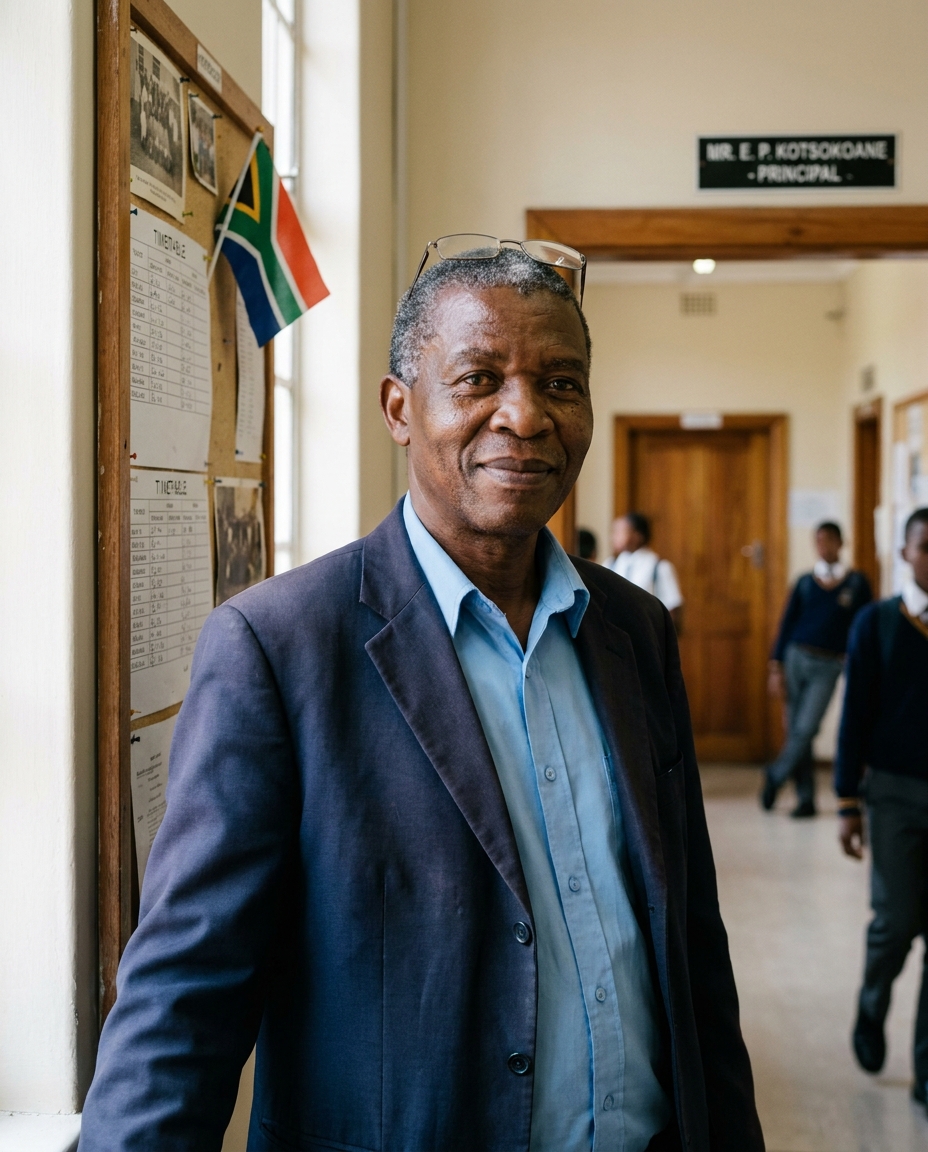
“A child who is known is a child who learns. We start there, every term.”
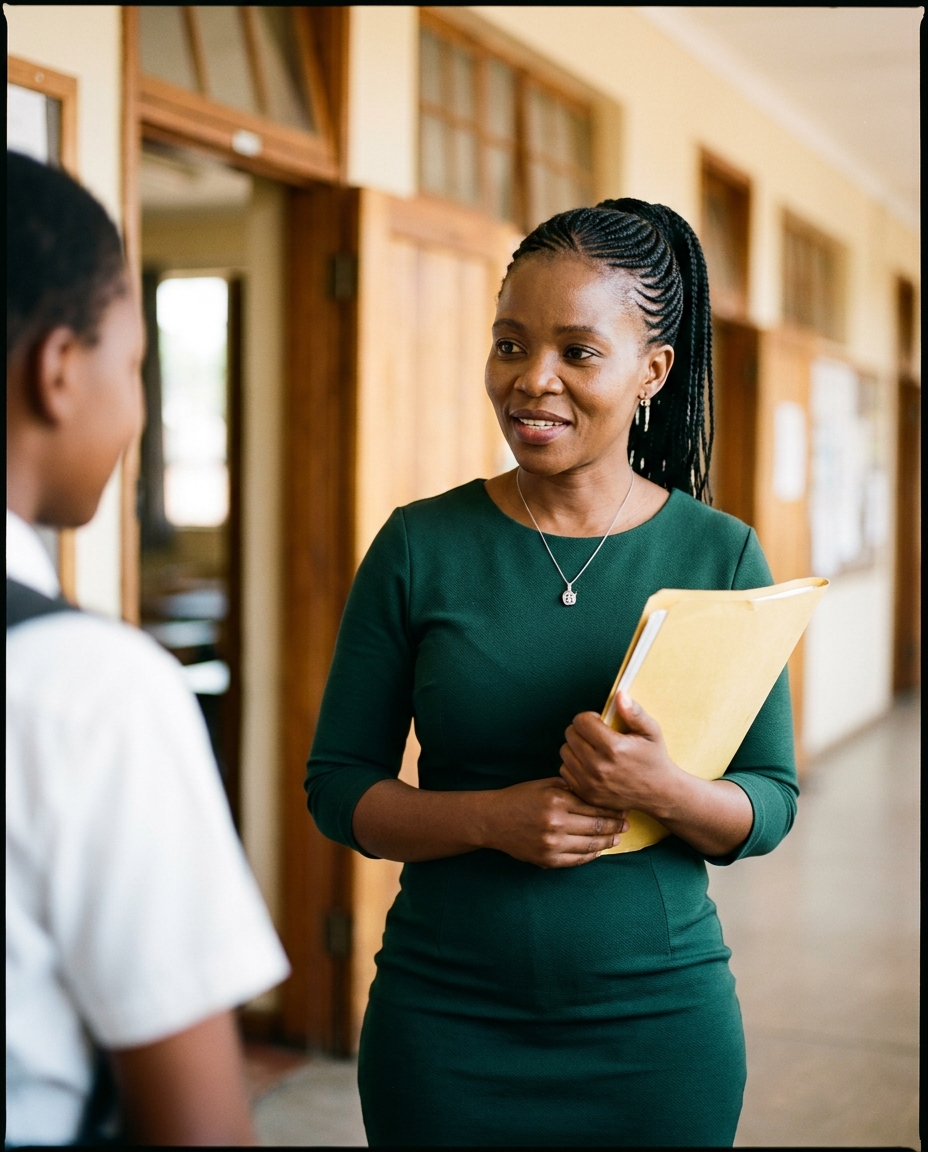
“Our timetable is the most honest thing about the school. If we say a child gets reading every day, they get reading every day.”
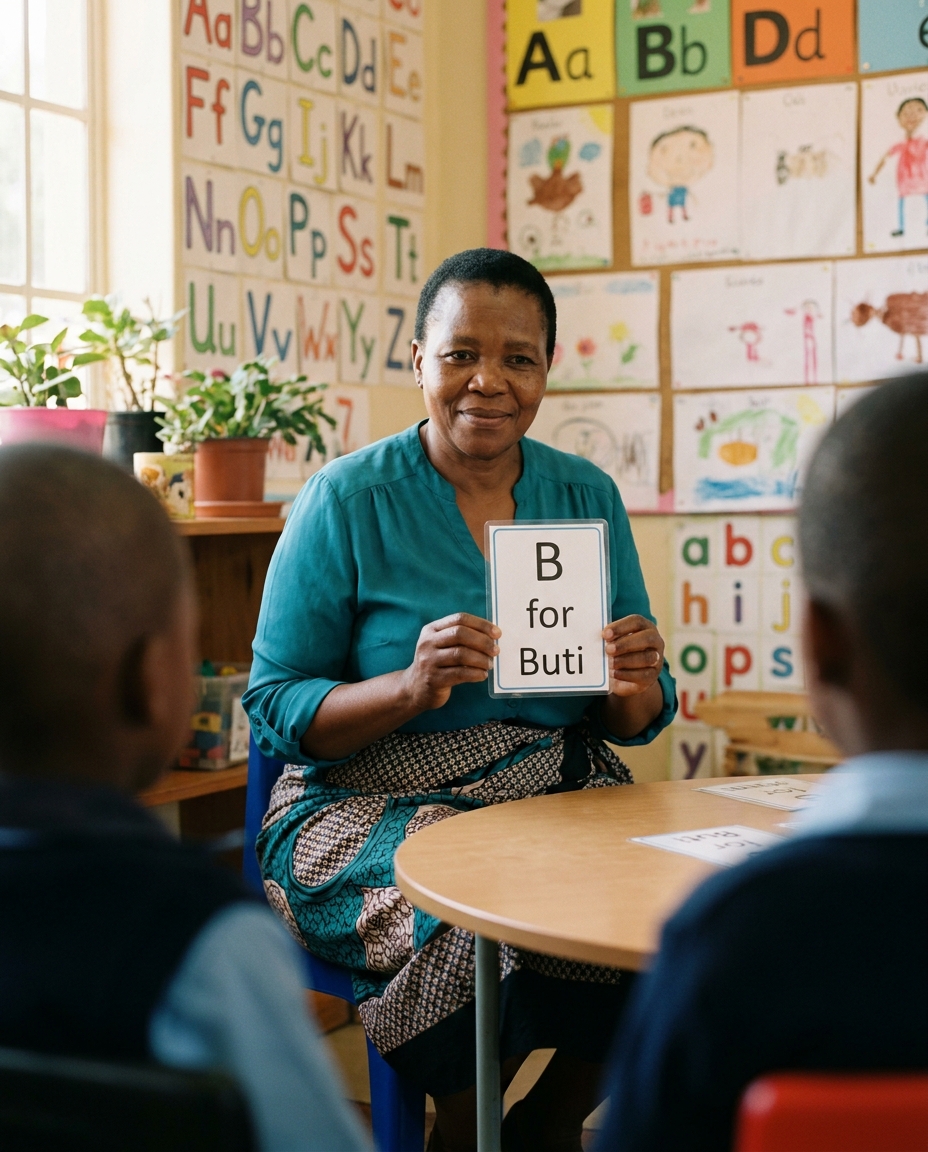
“In Grade R the work is small: a pencil grip, a circle on the carpet, learning to wait. We do that work seriously.”

“By Grade 7 the gap between learners can be wide. Our job is to close it — quietly, day by day, before they leave us.”